For the leadership of a major event organising committee
A major event is more of everything than any event you have run. It can still be led with confidence, when every piece of work has a reason, an owner, money and dates, in one structure the whole leadership reads.
01The first year
Busy is not organised.
Every task in that year is real. The whole year runs on the rights holder's calendar, and nobody has set their own. Whatever is decided in these months, and whatever is skipped, becomes how the organisation works.
02The order
Timeline, budget and org chart are outputs. They are often built first, because they are what people ask for first.
Built first, every line is a guess. When something changes, nobody can say which decision moved it.
Every line has a reason you can point to, and it changes when the decision changes.
A one-minute test. Pick any line in your budget. Name the programme it belongs to, the objective that programme serves, and who pays if it costs more. If nobody in the room can answer, the budget is a list of guesses with a total at the bottom.
03The evidence
Experienced people, public money, serious boards. Same cause every time: no single structure where the work, the money and the dates meet. From the auditors' own reports.
of Olympic Games since 1960 overran their budget, by 159 % on average (Oxford Olympics Study, 2024). Every finding is a structure that was never built. Work, contracts and money in separate files. No one deciding who decides. Dates nobody owned. A budget with no plan behind it. A forecast that did not move. That is the cause. It is built, or skipped, in the first months.
04The path
One road from the hosting agreement to the first real plan. Each step uses what the one before produced. The board walks it. The CEO arrives into what it built, and can manage from week one.
Strategy and structure do not wait for each other.Steps 1, 2 and 7 can start the day the agreement is signed. The structure grows from the contracts and the essentials while the strategy is still being built. Nothing waits for the final contract or the CEO.
What waits.The operating budget, the org chart, department plans, hiring directors, briefing an agency. Each will be asked for early, by someone reasonable. Done before the path, each one quietly becomes the plan.
05Where the work comes from
The source sets the priority. The sources are the same for every event. What comes out of them is yours.
What we signed
What is required
What the event cannot run without
What we decided
If the must-dos are safe
Kept, with the reason
06One address
Basket, programme, project. The leadership steers down to the project. Below it, the lines where money moves, and the doers' tasks.
One accountable executive each. Defined for this event first.
A cost centre. Owned before it grows projects.
Four names on it: who owns, who answers, who delivers, who pays.
Quantity × price. The contract, the invoice and the forecast land here.
Say "C3.1 is late" and everyone in the room knows who owns it, which clause it answers and how much money sits on it. The leadership decides whether the opening ceremony happens and at what scale. It does not decide the price of costumes.
07Five links
Planning, budget, progress, people and risk all read the same project. Same names, same owners, same numbers. Nothing is typed twice.
Hosting agreement, ceremony clause. Priority: must.
Ends: everything urgent, nothing justifiedPlanned back from the day the rights holder needs it.
Ends: deadlines in private calendarsComputed from what is decided, signed and done. Nobody types it.
Ends: green reports on red projectsThe sum of its lines. Counts the day the contract is signed.
Ends: learning the cost from the invoiceOwner, accountable executive, who delivers, who pays, and who pays the overrun.
Ends: work nobody owns or pays for08It rolls up
The rights holder does not answer on the ceremony concept in time. Performers cannot be booked before approval.
Every line belongs to one project, every project to one programme. The totals are never typed. They are added up.
If one line is stuck, the project is stuck, and the programme shows it. The report is a by-product of the work. Nobody compiles it.
09What your leadership can do
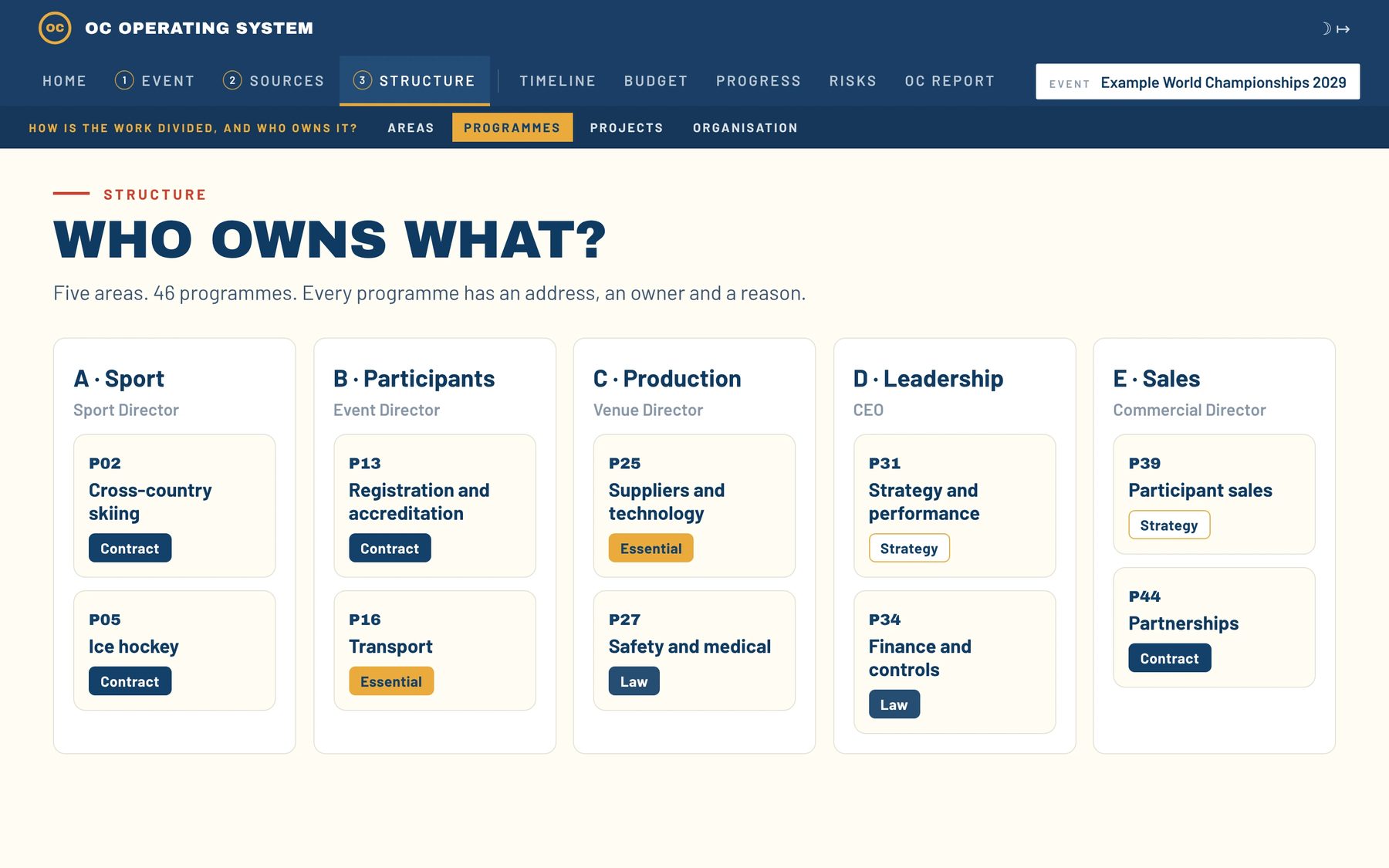
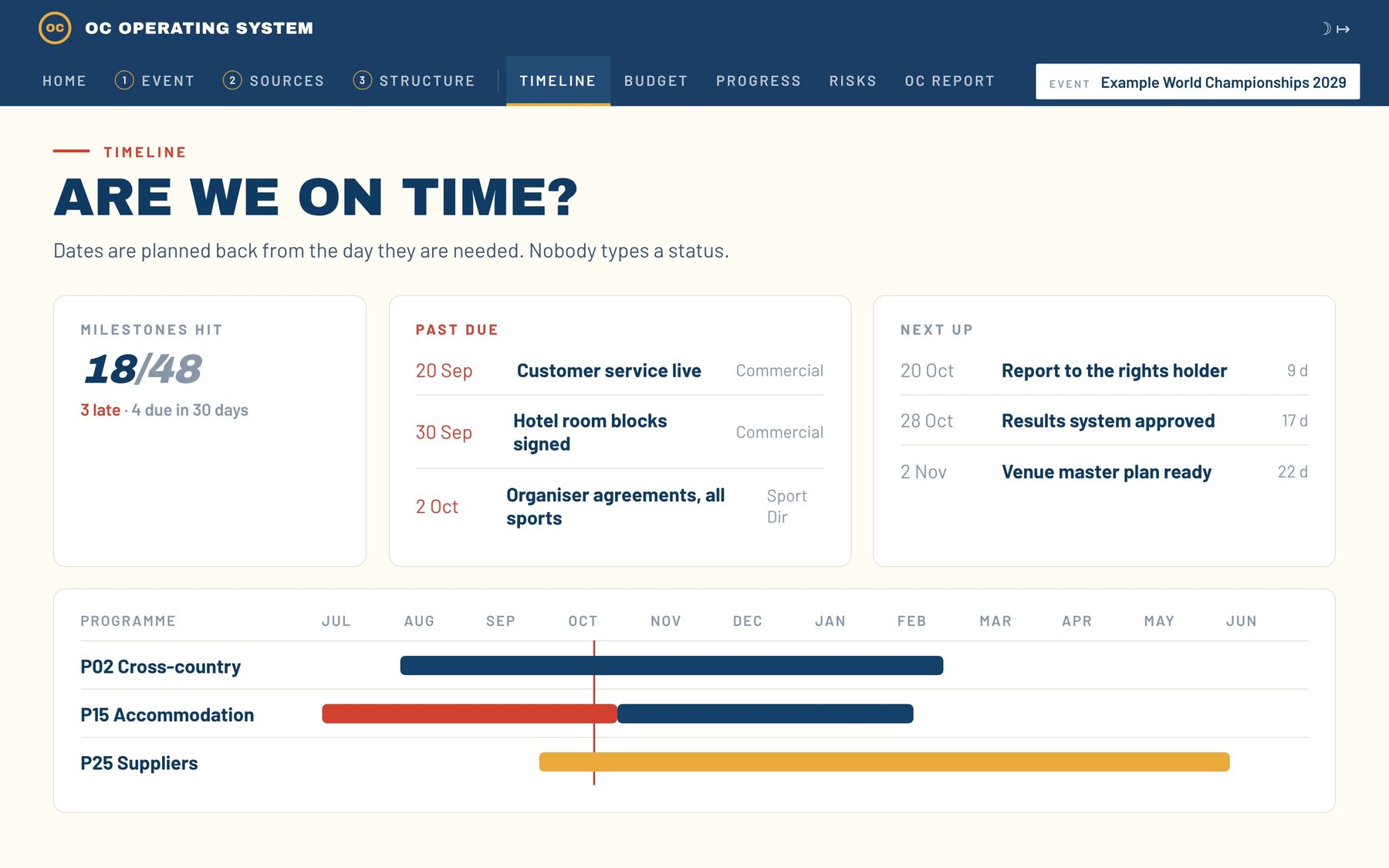
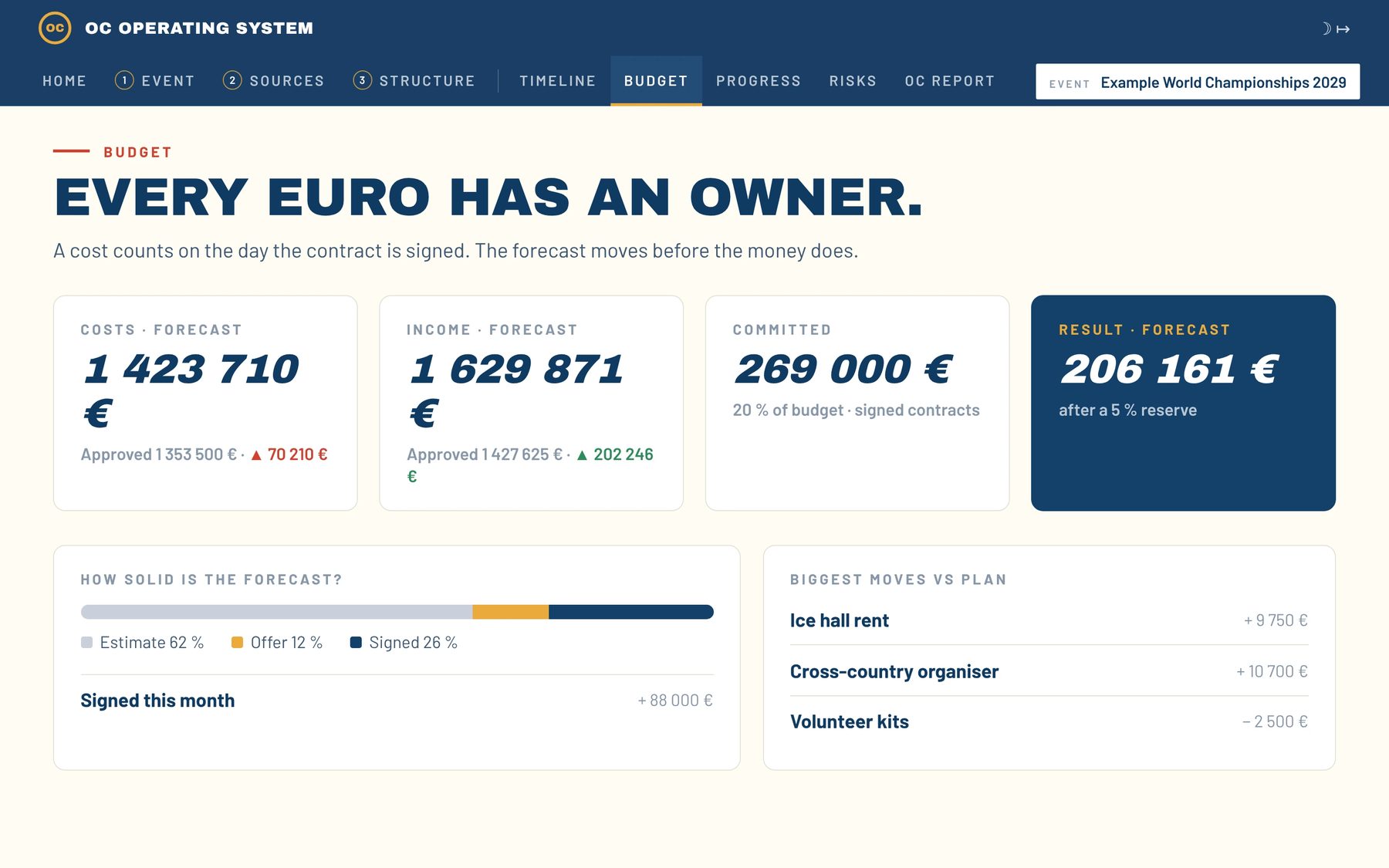
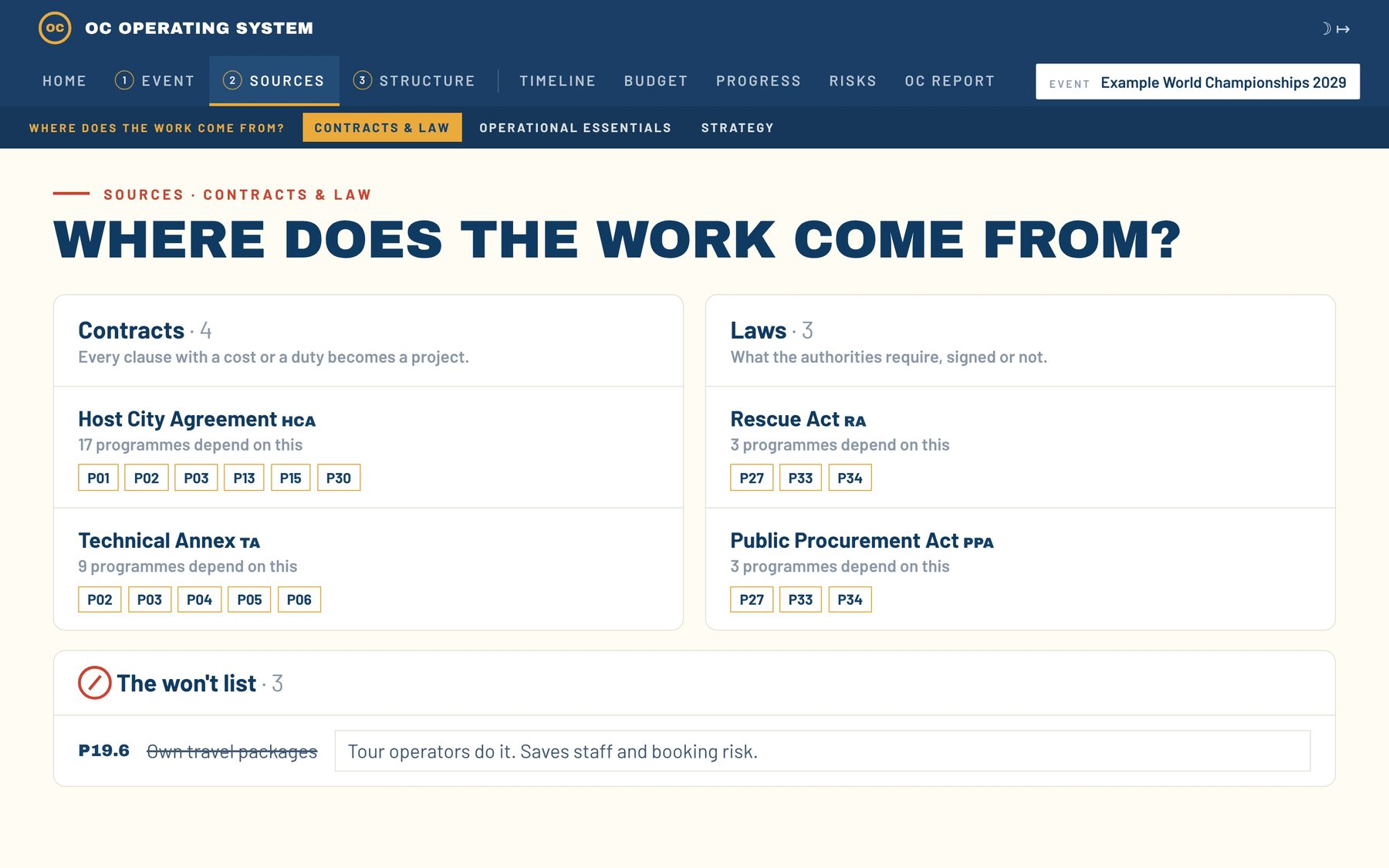
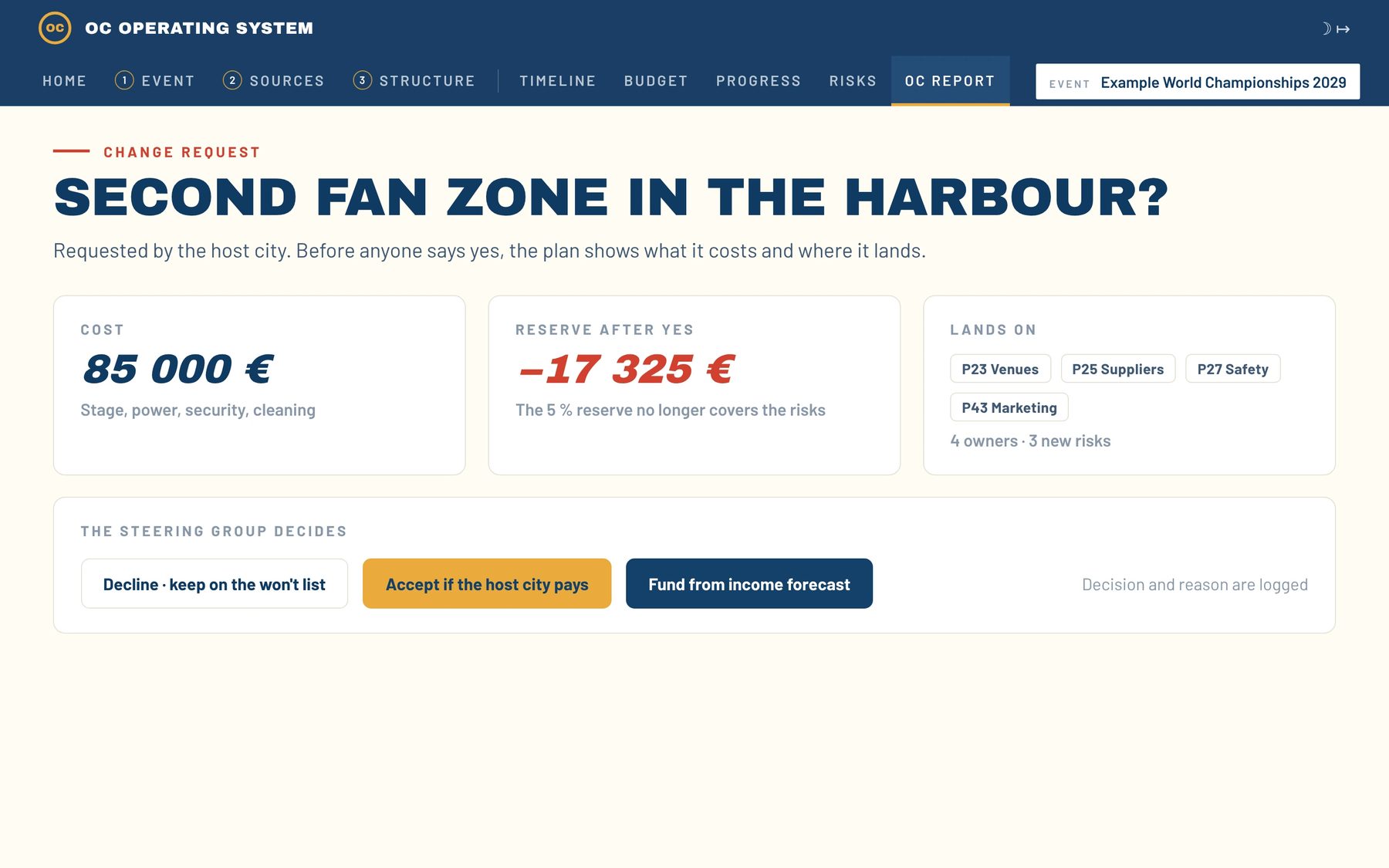
Simplified views from Major Event OS, example event. Click a screen to see it full size.
10One page a month
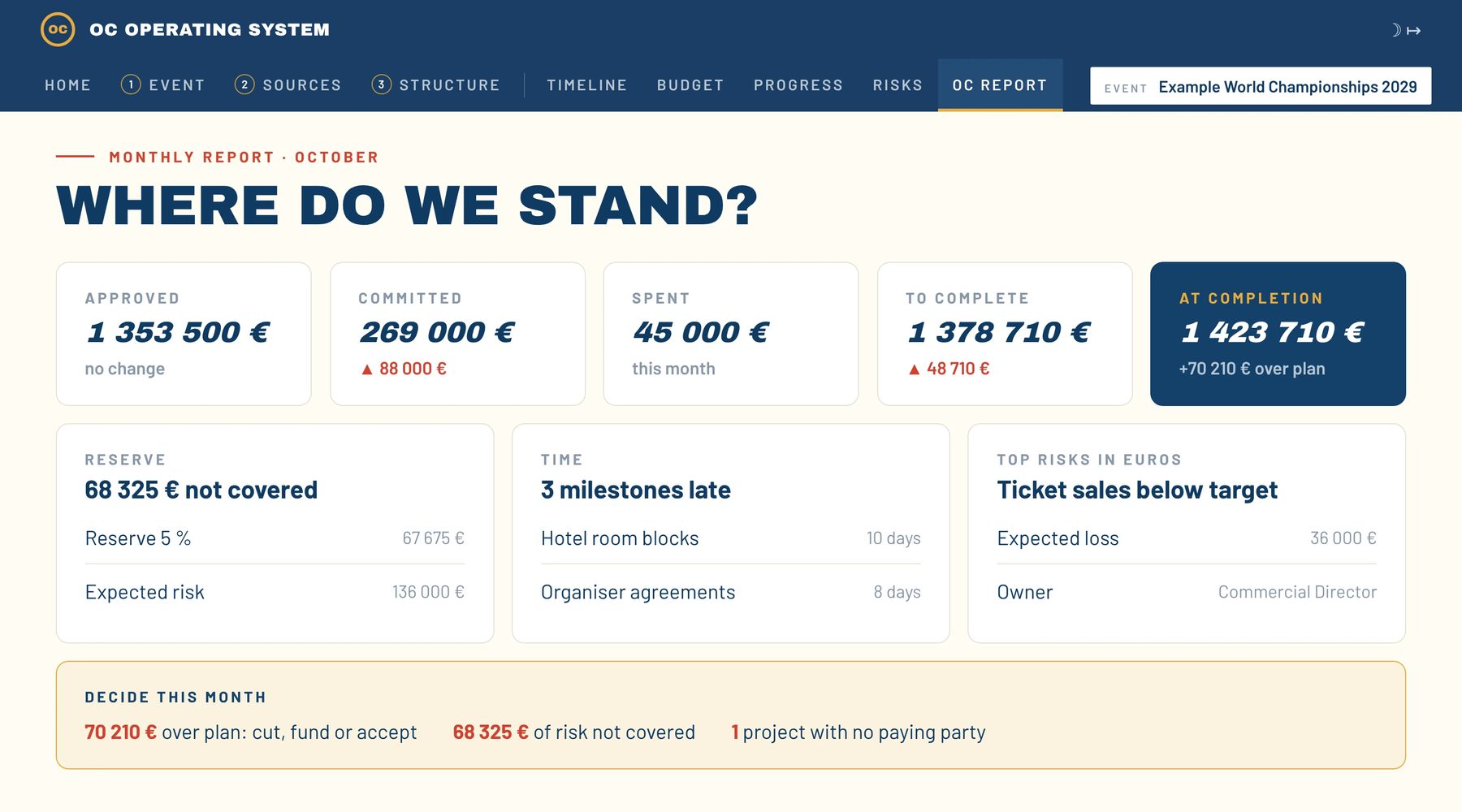
The page your board reads every month. Nobody writes it. It comes from the plan.
You walk into the board meeting with answers.
11Who wrote this
I was Event Director of the Lahti 2017 FIS Nordic World Ski Championships. In the early phase we did what most events do. We moved fast, ran on goodwill and spreadsheets, and spent months later aligning things that could have been settled in the first weeks.
I have worked both sides of the table, for the host city and inside the organising company. The structure on this page runs a 2028 multi-sport winter games and a 2029 world championships today. The method is written down in two books anyone can check.
Jesse Kiuru
12Next step
Send this to the person who will run the event. Twenty minutes with both of you is the best start. Bring your hosting agreement and your board calendar. No deck.